Creating a successful investor relations strategy requires more than simply implementing a CRM system. It requires building a culture of CRM adoption across the entire organization, from investor relations and business development to operations and leadership.
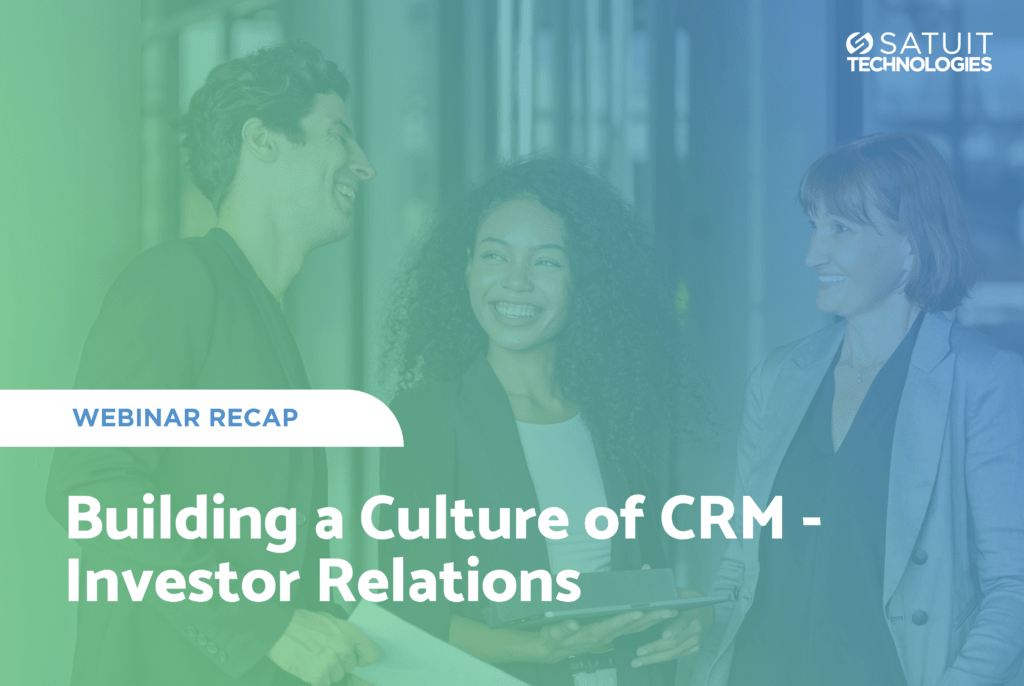
In Satuit’s recent webinar, “Building a Culture of CRM – Investor Relations,” we explored how investment firms can leverage CRM technology to strengthen investor relationships, improve collaboration between teams, and create a scalable framework for managing the full investor lifecycle.
The session highlighted the importance of aligning people, processes, and technology to ensure CRM becomes an integral part of daily operations rather than just another system.
Why CRM Culture Matters for Investor Relations
Many firms invest in CRM platforms but struggle to achieve full adoption. Often this happens when the system is seen as a reporting tool rather than a strategic resource for managing investor relationships.
Building a strong CRM culture means ensuring the platform supports how teams actually work and helps them perform their roles more effectively. When properly implemented, CRM systems allow investor relations teams to:
- Maintain a complete view of investor relationships
- Track communications and engagement history
- Monitor fundraising activity and pipeline progress
- Improve collaboration between departments
With the right processes in place, CRM becomes a central hub for managing investor interactions and driving more informed decision-making.
Improving Collaboration Across Teams
Investor relations activities often involve multiple departments including marketing, sales, operations, and client service. Without a centralized system, communication gaps can quickly emerge.
CRM platforms help bridge these gaps by creating a single source of truth for investor data and relationship activity. This ensures that every team member has access to accurate information about investor interactions and ongoing opportunities.
As a result, firms can deliver a more coordinated and consistent experience for investors.
Structuring Onboarding and Service Delivery
Once a prospect becomes an investor, firms must manage onboarding and ongoing service delivery efficiently.
CRM workflows can support these processes by helping teams:
- Track onboarding tasks and documentation
- Manage client communications
- Coordinate activities between teams
- Maintain detailed records of investor interactions
This structured approach helps ensure that investors receive consistent service while allowing firms to manage growth without adding unnecessary operational complexity.
Creating a Scalable Framework for Growth
One of the key takeaways from the webinar was the importance of designing CRM workflows that support long-term scalability.
As firms grow, manual processes and fragmented systems can slow down operations and create data inconsistencies. By tailoring CRM processes to match the investor lifecycle, firms can streamline operations while maintaining high-quality investor engagement.
Automation, standardized workflows, and centralized data management all play an important role in creating a CRM framework that supports sustainable growth.
Watch the Webinar On-Demand
Building a culture of CRM requires more than technology, it requires alignment across teams, clearly defined processes, and a shared commitment to using CRM as a strategic tool for managing investor relationships.
If you missed the live webinar, you can watch the full recording to learn how investment firms can strengthen investor relations, improve collaboration, and build a scalable CRM strategy.
Watch the webinar on-demand to see how Satuit helps firms build a culture of CRM that supports stronger investor relationships and long-term growth.